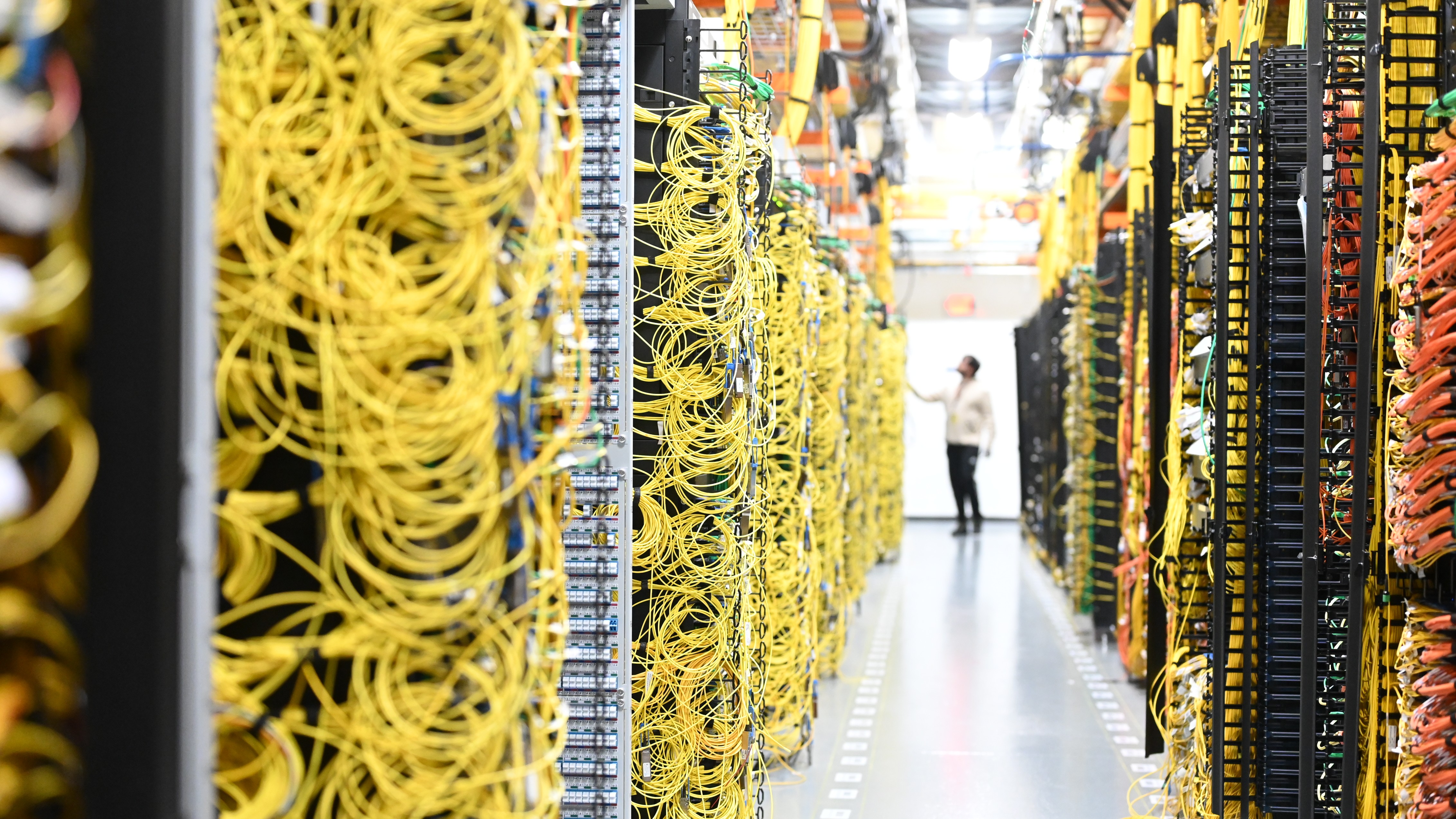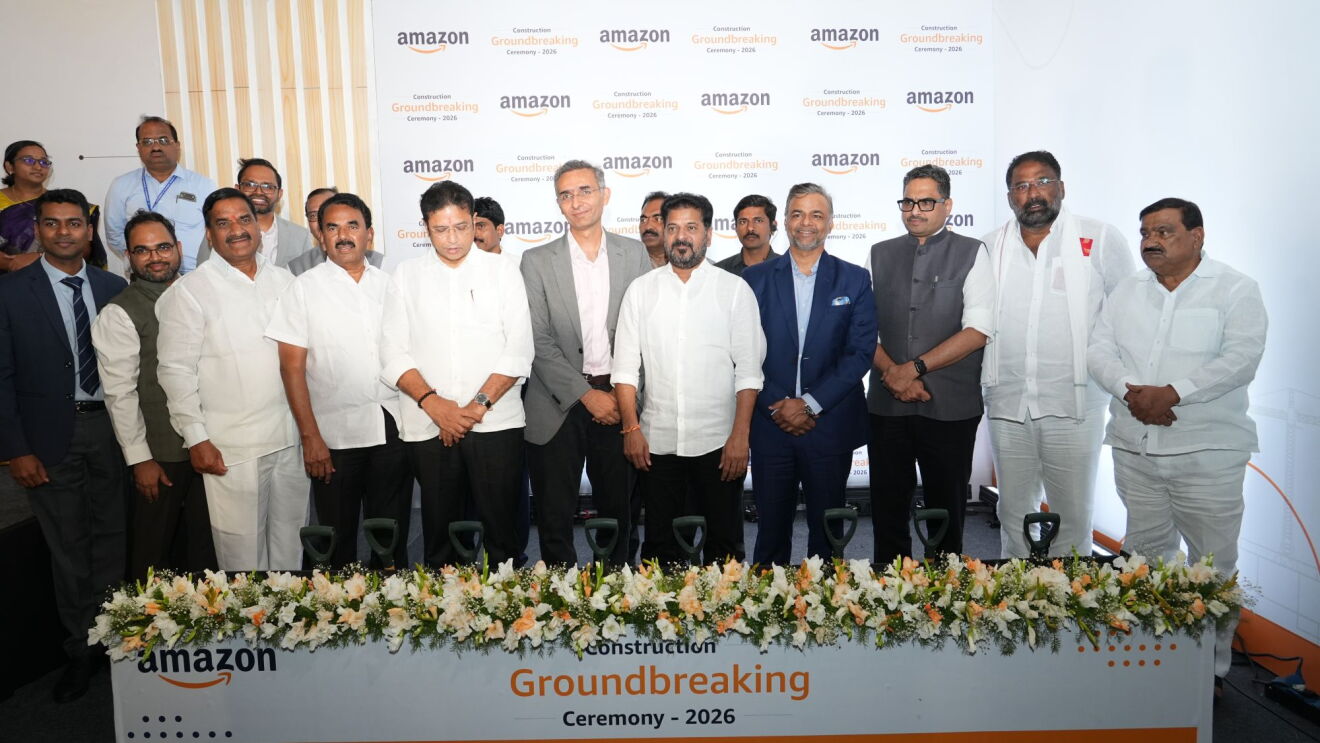

We're proud to be investing in Maharashtra with a new state-of-the-art data centre in Thane. Data centres deliver the digital services millions of Indians rely on every day, and Amazon is committed to building and operating them responsibly.
We're aware of recent false claims about this project. Here are the facts.
No water to be used for cooling in our Thane data centre
Amazon’s data centre development in Thane will not use any water for cooling. In fact, we do not currently use water for cooling in any of our data centers in India, and do not draw from the community’s drinking or potable water for cooling purposes.
We will use closed-loop cooling technology to cool our Thane data center. Closed loop cooling is a looped thermal management system that continuously recirculates a fixed volume of coolant through closed pipes to absorb and remove heat from data halls, without consuming water. Because the system is completely sealed, no water evaporates, no potable water is drawn from municipal sources, and no wastewater is discharged.
When we apply for water permits, we use projected consumption estimates based on initial data center designs. But we are continuously innovating the design and engineering of our data centers. The total water use at our Thane facility will be 125 kilolitres per day (KLD). Of that, 10 KLD is for basic human needs, including restrooms and drinking water for employees, and 115 KLD is treated sewage water for landscaping and irrigation, supplied by the Thane Municipal Council (TMC).
Our commitment to water stewardship extends beyond our data center walls. In Thane, we’ve invested $1.2 million through our Right Now Climate Fund to help clean up Thane Creek—one of the most polluted waterways in the world. With Hasten Regeneration, we're removing 150 tons of plastic waste, planting 375,000 mangroves, and preserving the flamingo habitat along the creek.
Amazon recently became water positive in India, meaning we now return more water to communities than we use across our direct operations, including our data centers. In 2025, we returned 120% of the water we used. We've also invested more than ₹62 crore in water stewardship initiatives across six Indian states. For example, Amazon Web Services' collaboration with Water.org delivers over 500 million litres annually to communities around Mumbai and Hyderabad.
No power to be drawn from the local distribution network
Beyond water stewardship, we are taking the same care with electricity. Our Thane data center will not draw electricity from the local distribution network that supplies homes, shops and businesses. Instead, we are on an industrial connection to the high-voltage transmission grid, and have established our very own dedicated high-voltage substation, planned in coordination with the utility.
We're committed to powering our data centers responsibly and invest in renewable energy projects in India to ensure our power is backed by new clean energy generation. Amazon has invested in 53 solar and wind projects in the country to date. Together, they generate over 4 million megawatt-hours of clean electricity annually in the country—enough to power the equivalent of 1.3 million Indian homes.

Keeping noise and heat effects low for the community
Amazon has been operating data centres for nearly two decades, and we have always priortised minimising the impact on our communities. We strive to design our facilities to protect the health and welfare of our neighbours.
Our Thane data centre will be built and operated in compliance with legal noise limits under the Noise Pollution (Regulation and Control) Rules, 2000. We are investing in advanced technology and engineering for industry-leading sound management, including sound-dampening building materials and insulation, strategic placement of equipment, and acoustic enclosures and mufflers where needed.
Reliable backup power is important to help maintain uninterrupted service during a power outage, as our data centres help support essential services people rely on every day. The generators will not be in constant use and mostly run for brief mid-day tests to ensure they are ready and reliable when needed during rare emergencies. This minimal operation reflects our commitment to reducing air emissions while ensuring the continuity of critical services the community and our customers depend on.
Managing heat is an important part of our facility design. The heat from servers is released through air handling systems that distribute heat efficiently. The heat dissipates naturally into the atmosphere without affecting the air temperature in nearby communities.
Our environmental clearances are publicly available
When we construct data centers in India, and around the world, we follow the rules.
The Environmental Impact Assessment (EIA) report and other supporting documents for the Thane data center site are publicly available on the Indian Government's PARIVESH environmental portal and have been since the date we submitted our application.
The Environmental Clearance approval was also published in English and local-language newspapers as required by permit conditions.
Amazon remains committed to complying with all applicable laws, regulations, and local permitting requirements wherever we build and operate our data centers.
All tree work carried out with valid permits
All tree felling at our Amazon data center site in Thane has been carried out in compliance with the law and Amazon has a valid permit issued by the TMC. For every tree removed, we are planting more native trees on the site.
Our Tree No Objection Certificate (NOC) approves the replanting of 77 trees, the felling of 239 trees, and 2,209 compensatory plantings which have been carried out on site. The Geotag report of replanted trees and compensatory trees was submitted to TMC on 27 May 2026. A third party has been appointed to evaluate the health of the trees and submit the health status of replanted and compensatory trees every six months to the TMC.
Our commitment is not just to comply with the rules, but to manage development responsibly, with environmental considerations embedded from design through operation.
Partnering with the Thane community
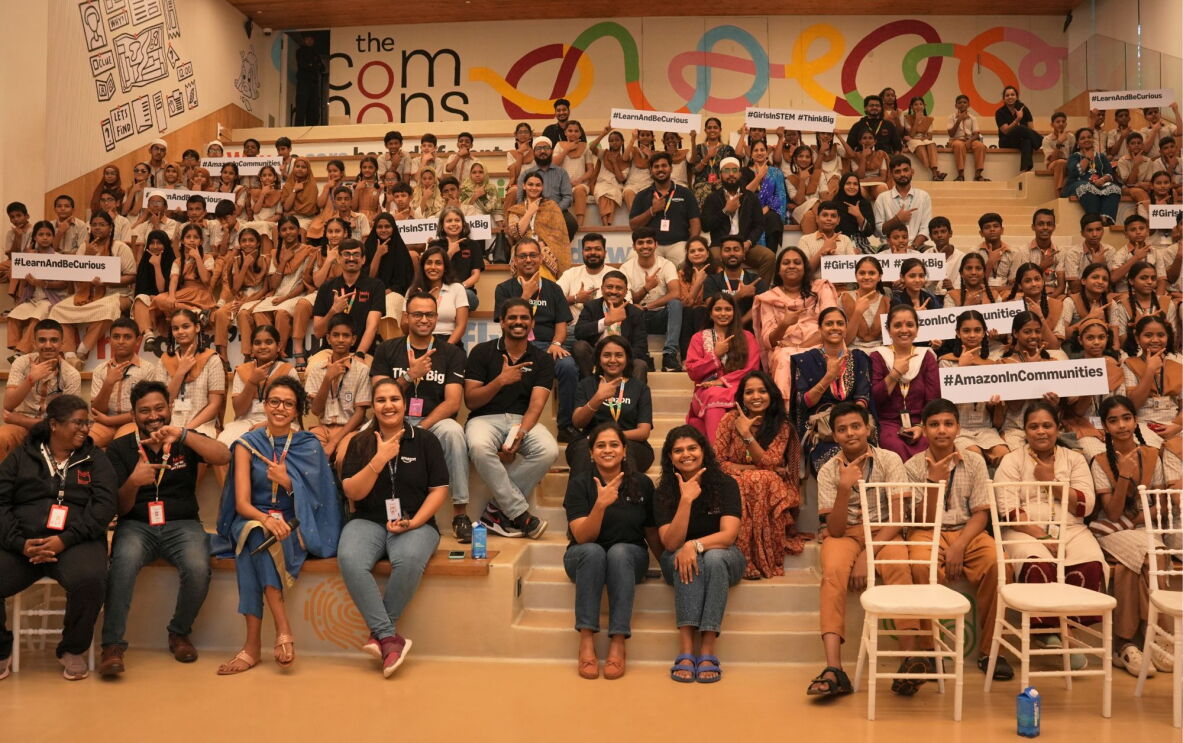
When we build infrastructure, we also partner with the local community. In Thane, we're providing STEM education to 900 students across nine schools through our Amazon Think Big Spaces Program, upskilling 200+ youth in cloud computing and IT, and serving nutrient-rich meals to over 2,000 students from underserved communities.
Amazon data centers support the full range of cloud computing services that our customers use, from storage and databases to machine learning and AI. Around the world, we design and engineer them to minimise the impact on our neighbours and the environment. We always strive to be a good and responsible neighbour. That's our commitment to Thane.