
Behind some of Amazon's fastest-scaling global products are teams in India who obsess over what Indian customers truly needed—designing solutions shaped by the complexity, diversity, and ambition of this country. What they created didn't just work for India, it turned out to be exactly what customers in the UAE, Saudi Arabia, Japan, and Mexico needed too.
As India celebrates its 80th Independence Day, and marches toward the vision of a Viksit Bharat, we celebrate Amazonians whose spirit of innovation mirrors that journey: self-reliant, future-ready, and built to inspire.
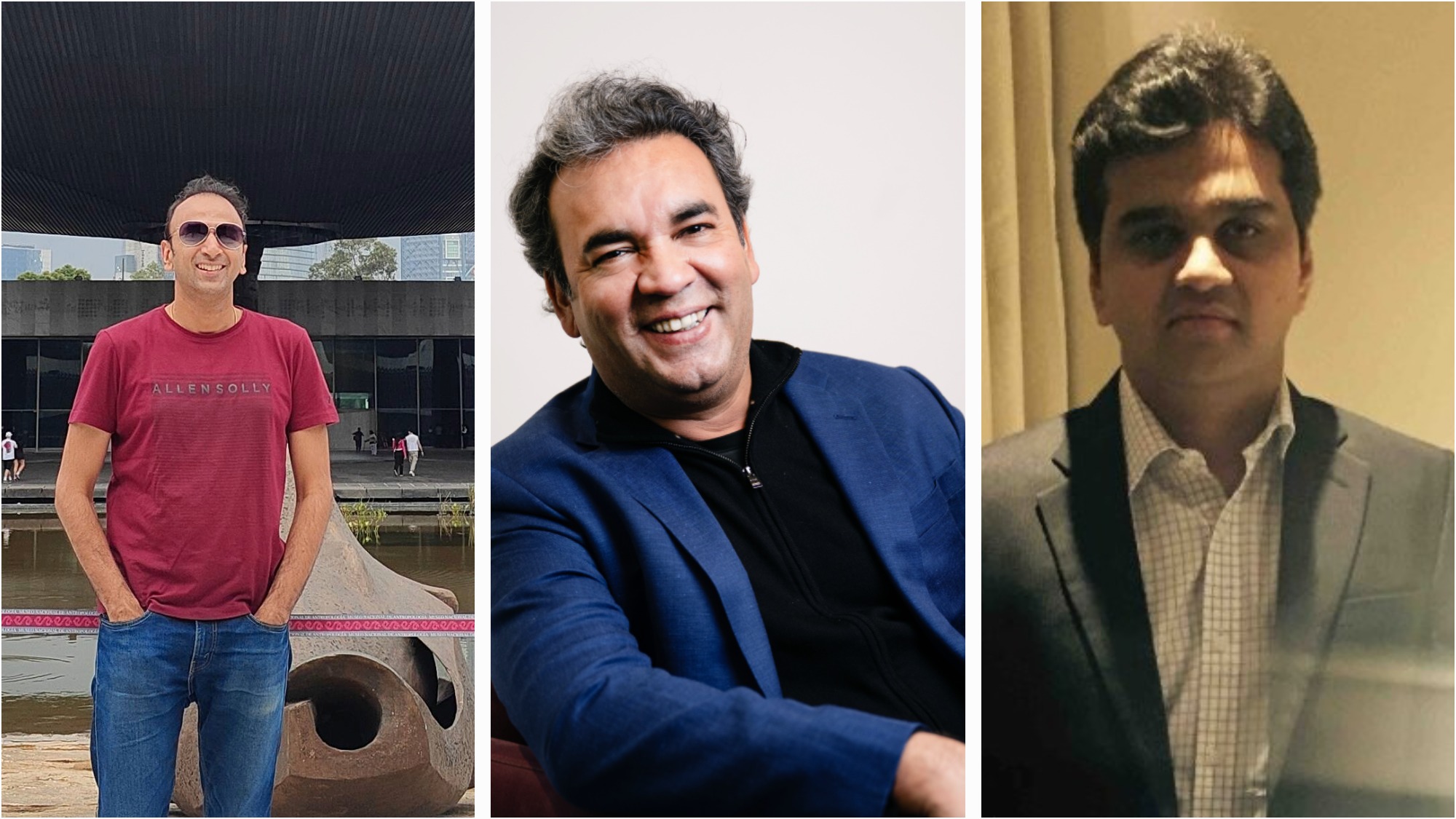
Awanish Narain Singh, Vice President - LATAM Operations, Amazon | I Have Space (Amazon Hub Delivery)
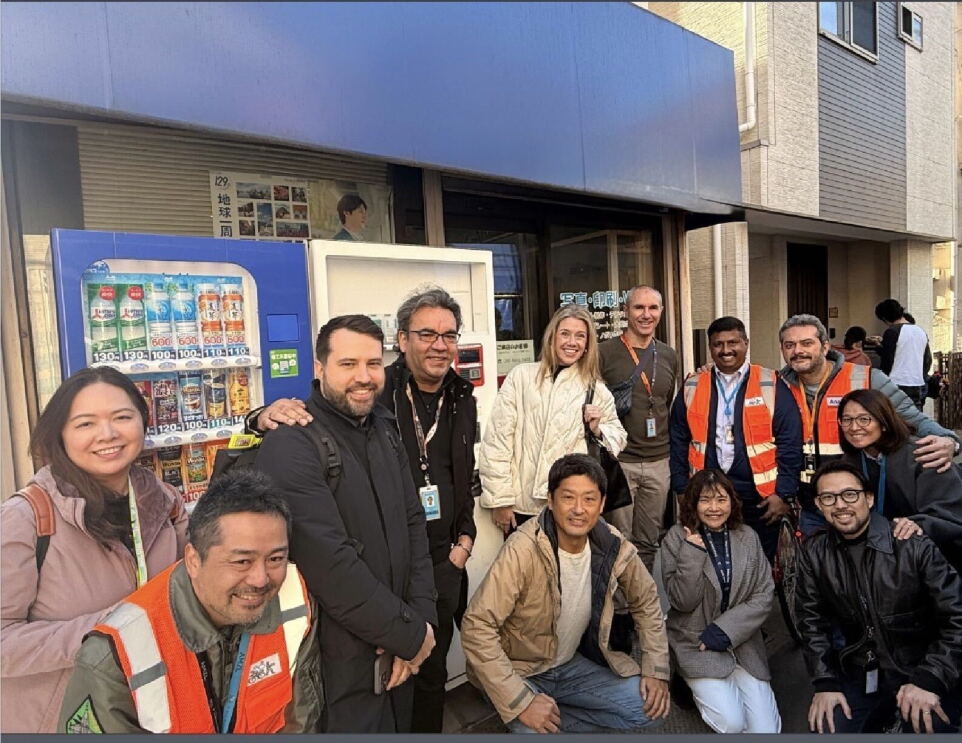
"We didn't build a delivery network for India. We recognised one that already existed—built over decades by millions of store owners who knew their neighbourhoods better than any algorithm ever could."
Awanish was part of the founding team that identified and scaled this opportunity. In India's tier 2 and tier 3 towns, traditional logistics networks don't always reach. Delivery vans can't navigate narrow lanes. Addresses exist only in someone's memory. And during peak seasons, demand surges 2-4x, yet building a flexible delivery workforce that scales without disrupting livelihoods remained one of India's most complex logistics challenges.
The solution was hiding in plain sight: the neighbourhood kirana store.
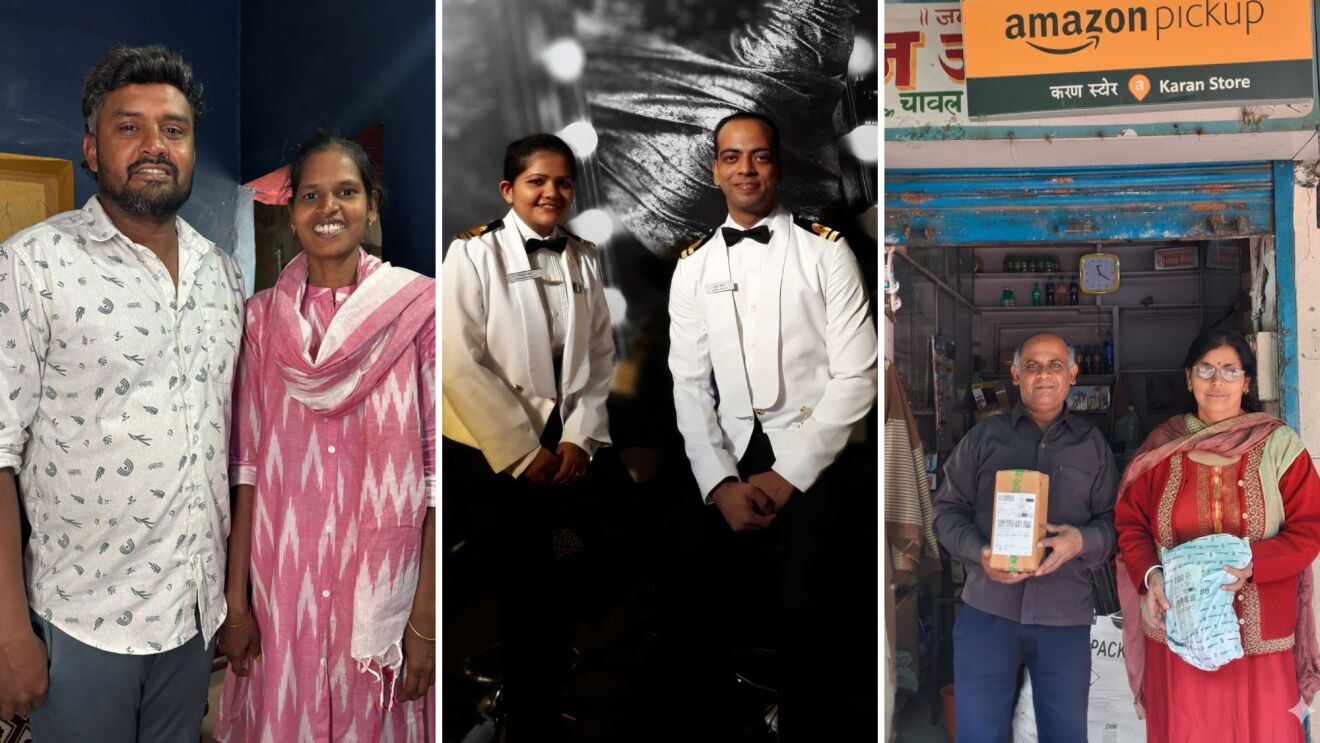
Launched in 2014 as 'I Have Space', the program reimagined kirana stores as micro-delivery stations. No new real estate, no capex. Just a partnership with store owners who already had space, time, and neighbourhood trust, delivering Amazon packages within a 2-4 km radius during free time, with zero upfront investment.
The team built feet-on-street Account Development Executives to onboard and engage kirana partners locally, and Amazon-scale technology behind the scenes—automated tracking, accurate payouts, daily earnings visibility.
Then the world took notice. Every country struggles with last-mile cost, driver availability, and delivery reliability. India had cracked all three simultaneously - not with expensive technology, but with a human-centred model that turned existing community assets into logistics capacity.
The model expanded globally as Amazon Hub Delivery—first to Mexico (~2019), where India's store-partner framework was adapted for Latin American retail ecosystems. Then Japan (~2020), where the neighbourhood store culture made it a natural fit—deliveries happen on foot and bicycle, supporting sustainability goals. It then scaled to the USA (~2020), Spain, Egypt, UAE, and Brazil (~2023), each adapting India's core architecture to local realities.
"When we took this to Japan, a small shop owner told us their earnings went up meaningfully — just by using their space differently. That validation told me we'd built something truly universal," says Awanish.

Nikhil Umarane, Sr Manager - Operations, Quick Commerce, Amazon India | Amazon Now
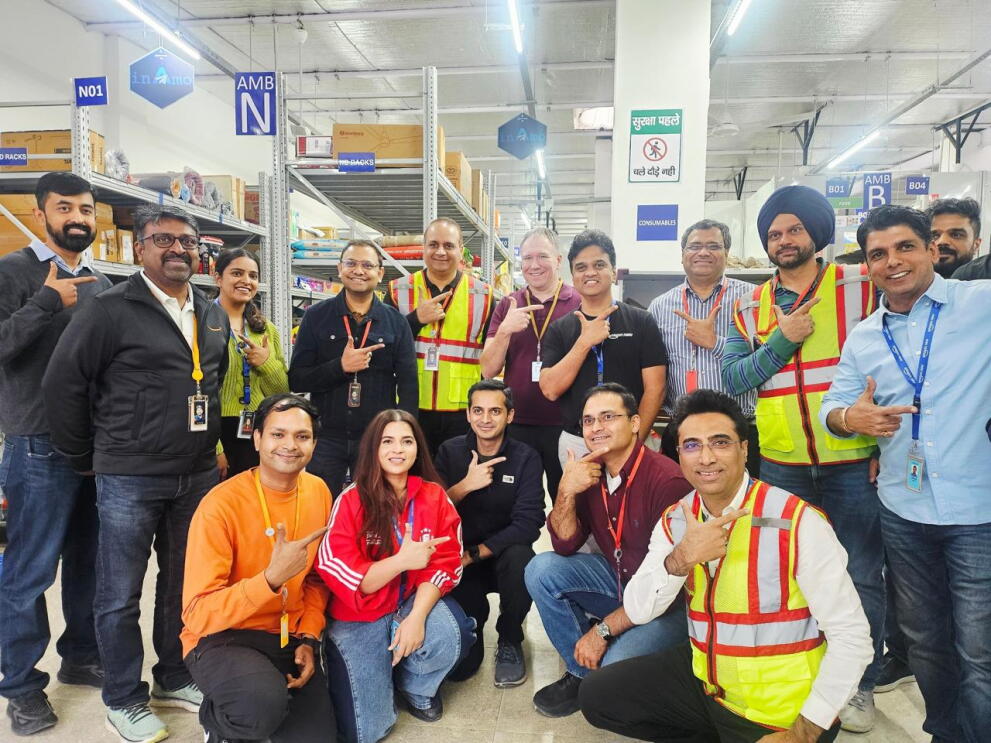
"We weren't adapting a readymade playbook - we were writing one from scratch for a country where the rules of logistics are fundamentally different." Nikhil was part of the core team that built and scaled Amazon Now from the ground up.
When Amazon launched Amazon Now in January 2025 with four micro-fulfilment centres in Bangalore, the team was solving for what Indian customers demanded most: speed, access and availability. Delivering thousands of everyday essentials to a customer's doorstep in minutes, at scale, across cities with complex infrastructure constraints—that was the challenge the team set out to crack.
And crack it they did, The team assessed 9,000+ potential locations and is now progressing towards over 1,000 MFCs, at peak, launching two new centres a day. The India model proved you could deliver thousands of essentials in minutes at scale in one of the world's most complex environments.
The journey from India to nine countries unfolded rapidly. From Bangalore, the model expanded to other Indian metros, then to the UAE and Saudi Arabia—countries with similar density and topography. Mexico and Brazil followed, adapting for Latin American logistics networks. The UK launched with a wider delivery window, reflecting different urban densities. Each country validated the same truth: the architecture built for India's chaos was robust enough to flex anywhere.
CEO Andy Jassy highlighted Amazon Now during the Q1 2026 earnings call as it expanded to nine countries. "Hearing the CEO cite your work to Wall Street, knowing it started with four stores in Bangalore—that's a feeling I'll carry with me," says Nikhil.
The core architecture—AI-driven demand forecasting, single-order dispatch routing, sub-15-minute fulfilment—transferred directly to global geographies. What changed was the last mile: each country adapted to local regulations, delivery partner networks, and customer expectations.
"India proved that when Amazonians come together with Day 1 urgency, they can build something the whole world wants."
Gokul Kannan, Head of Product - Amazon Pay Rewards, Amazon India | Instant Bank Discounts
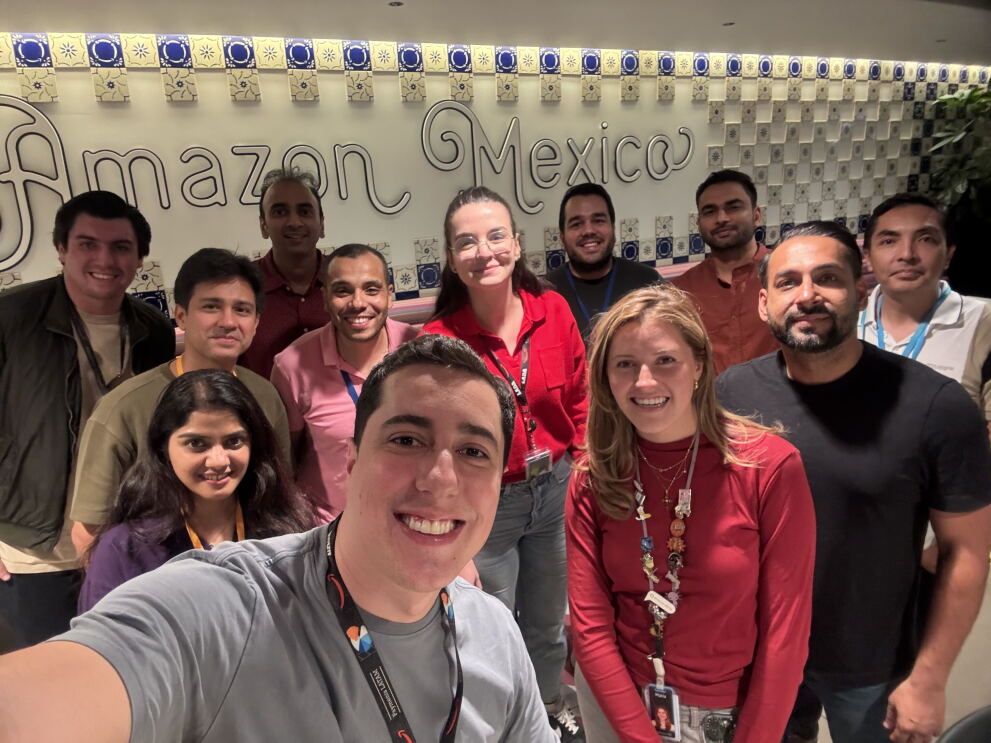
"India's complexity became our scaling advantage. What took 8+ years to build here was expanded to multiple countries in less than 2 years."
Gokul was part of the team that built and scaled Instant Bank Discounts from an India-only product to a global payments solution.
Behind every instant bank discount on a Credit Card at Amazon India checkout lies a deeply complex product—built to handle 30+ banks, each with different systems. Hundreds of simultaneous promotions resolved in milliseconds, real-time price calculations, and automated reconciliation across millions of daily transactions. That complexity turned into a superpower. In 2024, when MENA needed an affordability solution, their existing affordability levers had limited scalability. India’s unit economics helped the conversation shift from ‘should we?’ to ‘how fast?’ A solution designed for one country’s fragmented banking landscapes adapted readily with far fewer banks, making expansion faster than anyone expected. IBD is now live in UAE, Saudi Arabia, and Egypt, with further markets planned by year-end.
"The first order in every country has been a special moment," says Gokul. "Transitioning from an India-only product to something markets around the world look forward to has been the most satisfying part of the journey."

Building for a billion, inspiring the world
Three products. Three builders. One shared story.
None of them set out to build for the world. They set out to build for India — for its complexity, its constraints, its customers who demand more for less. And in doing so, they created solutions the world didn't know it needed.
This Independence Day, as India looks ahead to 2047, these Amazonians remind us that the spirit of building for Bharat isn't just about solving local problems. It's about proving that Indian innovation can lead globally.