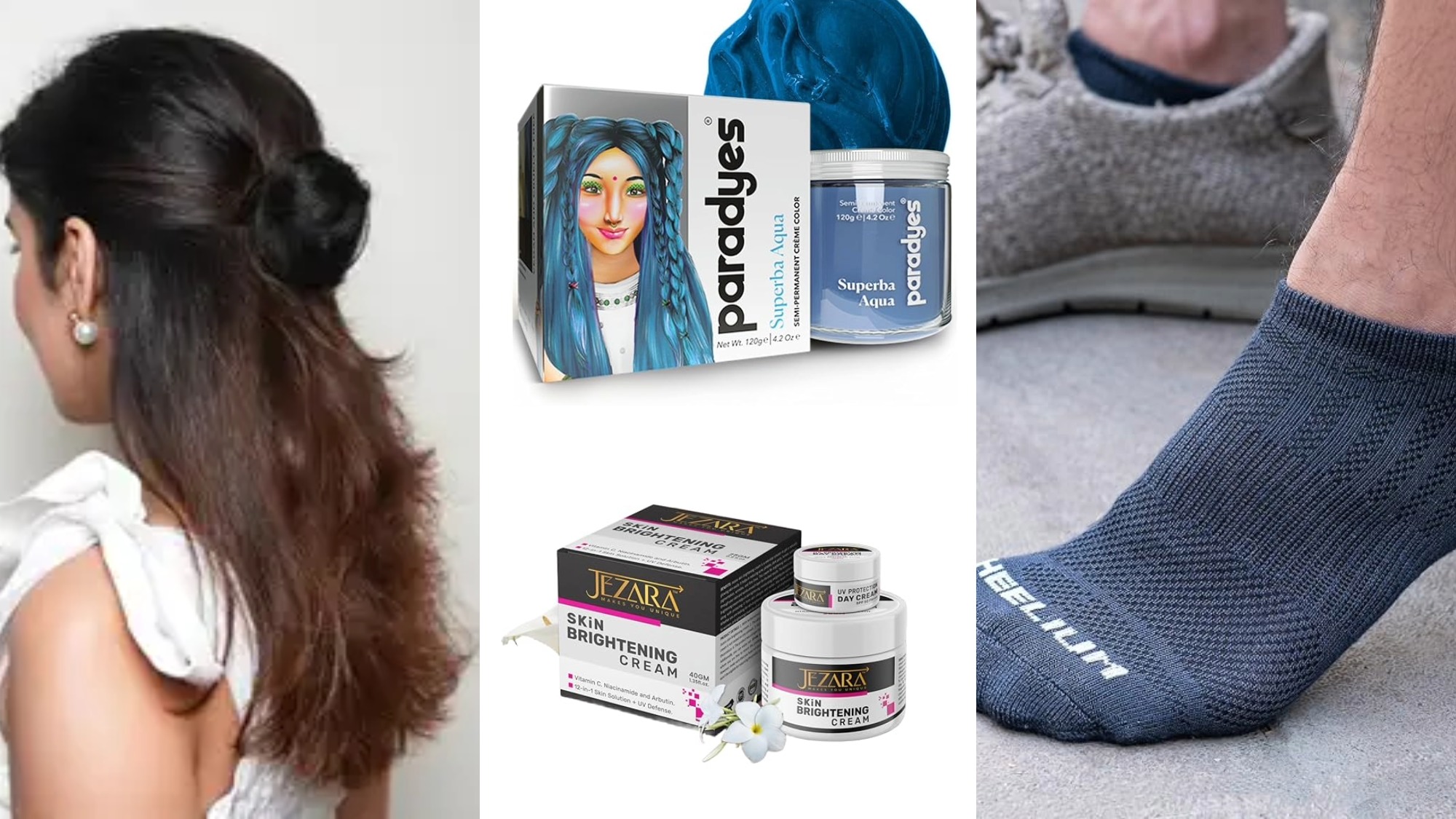

A search for hair extensions that returns nothing usable, a shelf full of hair dyes loaded with ammonia, a skincare market that talks about Ayurveda but rarely delivers on safety. India's newest consumer brands are not coming out of corporate incubators or VC pitch decks—they are coming from founders who looked at what was available on the shelf, found it inadequate, and built something better.
These four brands were built by founders who went looking for a product, could not find it, and decided to make it themselves. What they had in common beyond that was Amazon.in, a marketplace that gave them access to customers in cities they had never visited, tools to manage inventory and advertising without a large team, and fulfilment infrastructure that made nationwide delivery possible from day one.
1. Nish Hair
Parul Gulati was an actress who couldn't find decent hair extensions in India. She started Nish Hair in 2017 with an initial investment of around Rs 30,000, making clip-in extensions from 100% real human hair in her living room. Nish Hair sells clip-ins, toppers, and wigs designed for women experiencing hair thinning or loss, as well as those who want to experiment with length and volume without damaging their natural hair.
Through Amazon.in Nish Hair has reached buyers across smaller cities, where access to speciality hair products is otherwise limited.

2. Paradyes
Yushika Jolly had been colouring her own hair since she was 17. A NIFT graduate, she co-founded Paradyes in 2020 with her family after noticing that vibrant, safe hair colour products were simply not available in India. Paradyes makes semi-permanent hair dyes that are ammonia-free, paraben-free, PPD-free, and vegan. The brand started with bold shades—blue, pink, purple—and later expanded into subtler tones like Hazel Brown and Berry Plum, which work on darker hair without bleaching.
3. Jezara
Kkeval Bhikadiya founded Jezara with a clear belief: everyday skincare should be safe, ethical, and accessible. The brand blends Ayurvedic knowledge with modern scientific research, developing gentle formulations—designed to meet evolving expectations around safety and transparency. As a new entrant in India's competitive skincare market, Jezara faced the challenge of earning consumer trust without an established brand legacy. Strong reviews on Amazon.in combined with fulfilment reliability played a key role in building credibility. Today, the brand claims to serve customers across 28 states and 9 countries, with consistent month-on-month sales growth and a growing share of repeat customers.
4. Heelium
Siddharth Jain co-founded Heelium to accelerate the transition to sustainable products for everyday use, for athletes and homemakers alike. The brand claims to make high-quality essentials without jeopardising the environment, built on the premise that performance and sustainability do not have to be trade-offs. Heelium got its first order on Amazon in 2017 and has since scaled to multi-crore monthly revenue as a bootstrapped startup. As Jain puts it, "Cash flow is critical, and the zero-referral fee on products below ₹1,000 is a strong enabler. It allows us to reinvest more aggressively into scaling the business and launching new products. Amazon continues to support in our growth journey."
Zero referral fees on products priced under ₹1,000, now covering over 12.5 crore products, which means sellers like Heelium, Jezara, Paradyes and Nish Hair can save up to 70% in total fees, freeing up cash to reinvest in inventory, pricing, or advertising. These savings can be passed on to Amazon customers through sharper pricing, and reinvested into growth of their businesses. This could be through AI-powered tools such as: Seller Assistant, Amazon’s GenAI-powered assistant for real-time guidance on pricing, listings, ads, fulfilment, and compliance; AI-powered listing tools for faster content creation; and Product Opportunity Explorer for identifying high-potential products using real customer insights.